
Chiropractic Rehabilitation
in Pittsburgh
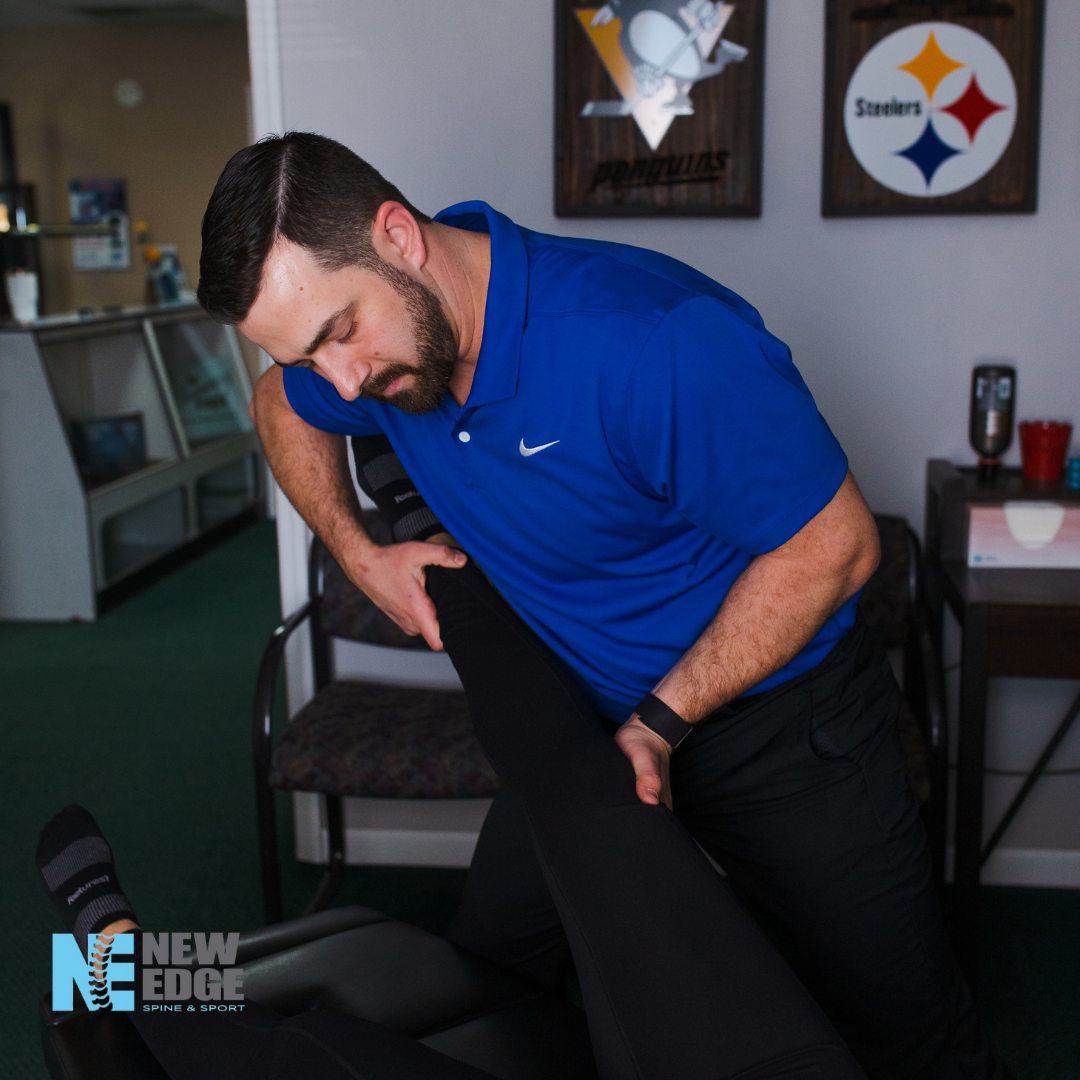
What is chiropractic rehabilitation and how is it different from a regular chiropractic visit?
Chiropractic rehabilitation combines hands-on joint treatment with progressive strength and mobility work in a structured plan of care designed to address the root cause of an injury or movement problem. Where a standard chiropractic visit focuses primarily on adjustments for pain relief, rehabilitation adds the targeted exercise and retraining component that builds the lasting capacity to stay out of pain under real-world load.
Most people who have been to a chiropractor before have experienced the adjustment and felt better temporarily. Rehabilitation is what happens after that window opens, where the work is done to make sure it stays open.
At New Edge Spine and Sport in Pittsburgh, rehabilitation is not an add-on. It is the model.
Why Adjustments Alone Are Not Enough for Most Injuries
An adjustment is one of the most effective tools available for restoring joint motion, reducing nerve irritation, and getting someone out of acute pain quickly. But it does not rebuild muscle function, restore movement patterns, or address the stability deficits that allowed the injury to happen in the first place.
That is why so many patients cycle through chiropractic care, feel better, return to activity, and end up back in the same position a few months later. The pain was treated. The underlying problem was not.
Rehabilitation closes that gap. It takes the movement the adjustment restored and builds the strength and motor control to maintain it under the demands of training, competition, and daily life.
What a Rehabilitation Visit Looks Like at
New Edge Spine and Sport
Every new patient starts with a comprehensive assessment. That includes a hands-on mobility screen where Dr. Ben checks range of motion through all relevant joints, followed by a movement screen where you perform specific functional movements that reveal how your body is actually loading, compensating, and distributing force. The findings from that assessment drive every decision made from that point forward.
Actual visits are one hour each, one on one with Dr. Ben from start to finish. A typical session includes soft tissue work and instrument assisted therapy to address muscle restriction, pin and stretch techniques to restore tissue mobility, joint adjustments targeted to the specific restrictions identified in your assessment, and a dedicated block of time in the rehabilitation area working on the mobility and strength progressions specific to your plan.
Nothing in the session is generic. The exercises, the manual work, the progressions, all of it is built around your assessment findings and adjusted as you improve.
Structured Plans of Care
Rehabilitation at New Edge Spine and Sport is delivered in structured plans rather than open-ended visit-by-visit care. Plans are available in three tiers based on the complexity of the problem and the goals of the patient: a foundational plan for patients dealing with a focused injury or movement restriction, an intermediate plan for patients with more complex presentations or performance goals, and a comprehensive plan for patients with chronic multi-site issues or who want to build a durable foundation for long-term athletic performance.
Each plan includes a defined number of visits, a clear progression structure, and measurable outcomes so you know exactly what you are working toward and how far you have come.
Who This Is For
Rehabilitation at New Edge Spine and Sport is for active adults and athletes who want more than temporary relief. The patients who get the best results here are people who have been through other forms of care, gotten short-term improvement, and want to understand why the problem keeps coming back and what it actually takes to fix it for good.
New Edge Spine and Sport serves patients throughout Pittsburgh and the South Hills, including Bethel Park, West Mifflin, Pleasant Hills, and Baldwin.
If you are ready to stop managing your injury and start building something that lasts, this is worth a conversation.