
Carpal Tunnel Treatment in Pittsburgh
What causes numbness and tingling in the hand?
Numbness and tingling in the hand or fingers has several possible causes and carpal tunnel syndrome is only one of them. The median nerve, which is responsible for sensation in the thumb, index, middle, and part of the ring finger, can be compressed at the wrist, but it can also be irritated at the pronator teres muscle in the forearm, at the thoracic outlet near the shoulder and collarbone, or at the nerve root in the cervical spine. Getting the right diagnosis determines everything about whether treatment actually works.
That tingling in your fingers when you type. The numbness that wakes you up at night. The hand that feels weak or clumsy gripping things. The sensation that runs from your forearm into your fingers and does not seem to have a clear trigger.
You have probably been told it is carpal tunnel. You may have been given a wrist brace, told to rest it, or referred for nerve conduction testing. And you are probably still dealing with the same symptoms.
At New Edge Spine and Sport in Pittsburgh, the first job is figuring out where the nerve is actually being compressed. That answer changes the entire treatment approach.
Why Carpal Tunnel Is Frequently Misdiagnosed
True carpal tunnel syndrome, where the median nerve is compressed specifically at the carpal tunnel in the wrist, is less common than most people assume. The majority of patients who come in having been told they have carpal tunnel are actually dealing with nerve compression somewhere else along the pathway.
The pronator teres muscle in the forearm is one of the most commonly missed culprits. When that muscle is tight or overworked, it compresses the median nerve as it passes through, producing symptoms that feel identical to carpal tunnel but originate nowhere near the wrist.
Thoracic outlet syndrome is another frequently overlooked source. Compression at the thoracic outlet, the space between the collarbone and first rib, can affect the entire nerve bundle supplying the arm and hand, producing numbness, tingling, and weakness that gets misattributed to a wrist problem.
Cervical spine dysfunction is a third possibility. A restricted or irritated nerve root in the neck can refer symptoms all the way into the hand and fingers. Treating the wrist when the problem is in the neck produces no lasting results.
Cubital tunnel syndrome, compression of the ulnar nerve at the elbow, produces numbness in the ring and pinky finger and is a separate diagnosis entirely that gets lumped into the carpal tunnel category regularly.
Getting this right requires an assessment that follows the nerve, not just treats where the pain ends up.
What We Do Differently
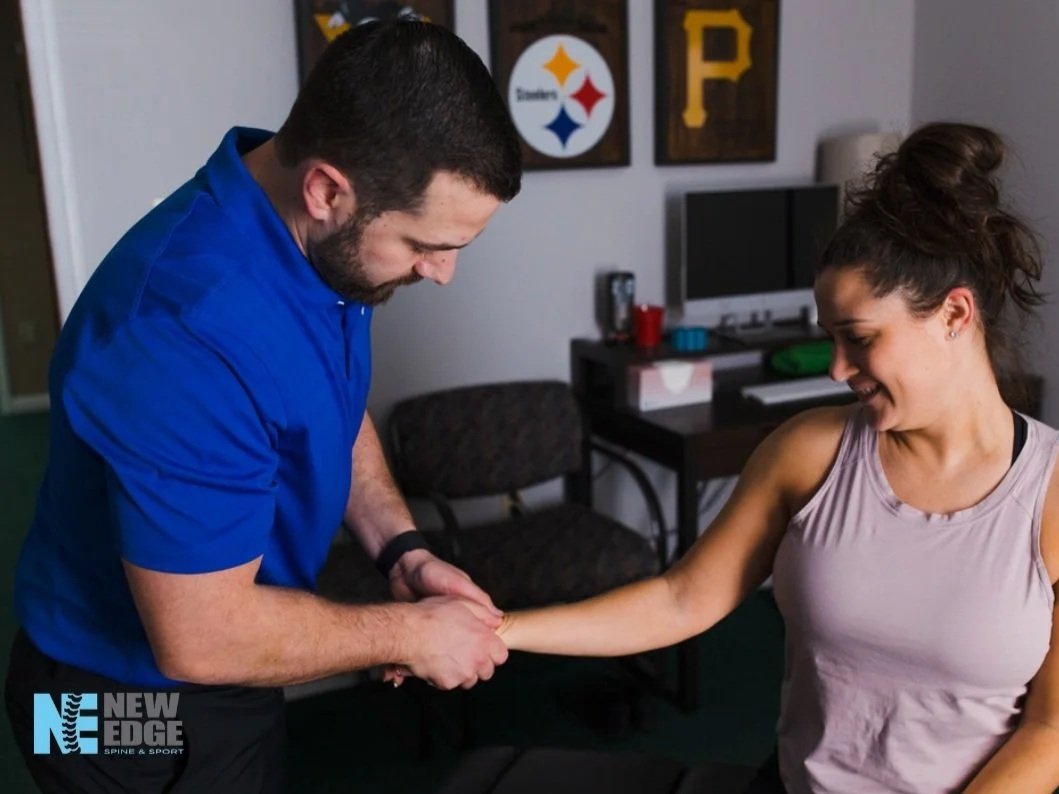
Assessment at New Edge Spine and Sport traces the full pathway of the nerve from the cervical spine through the shoulder, thoracic outlet, elbow, forearm, and wrist. The goal is to identify exactly where compression is occurring before any treatment begins.
Once the source is identified, treatment is targeted to that location. For true wrist involvement, that includes instrument assisted soft tissue work to the surrounding structures and joint manipulation to restore proper wrist mechanics. For pronator teres involvement, treatment focuses on releasing the muscle and restoring forearm function. For higher level compression at the thoracic outlet or cervical spine, treatment shifts accordingly.
Your visits are one full hour with Dr. Ben. One on one, no generic wrist protocols applied before anyone figures out what is actually wrong.
What Patients Tell Us When They First Come In
My fingers go numb when I type and it wakes me up at night.
I was told I have carpal tunnel but the brace has not helped at all.
My whole hand feels weak and I keep dropping things.
The tingling goes from my forearm all the way into my fingers and I cannot figure out what triggers it.
I had carpal tunnel surgery years ago and the symptoms came back.
That last one is a significant pattern. Carpal tunnel surgery that does not produce lasting relief is often a sign that the compression was never at the wrist in the first place. The surgery addressed the wrong location.
Who We See
New Edge Spine and Sport treats hand and wrist nerve symptoms throughout Pittsburgh and the South Hills, including Bethel Park, West Mifflin, Pleasant Hills, and Baldwin. If you have been told you have carpal tunnel, treated for it, and are still dealing with the same symptoms, this is worth a conversation.